

From Tour Guides to Tourism Ambassadors: Why Communication Defines ASEAN Readiness in Philippine Tourism
By Dr. Sheila Viesca
Executive Summary
As the Philippines assumes a more visible leadership role within ASEAN, tourism is no longer simply a sector of economic activity—it is a platform for national representation, regional integration, and global perception.
ASEAN, with nearly 700 million people and one of the fastest-growing economic regions in the world, is poised to become the fourth largest economy globally by 2030. Within this dynamic environment, tourism has emerged as a critical driver of both economic growth and cultural diplomacy.
For the Philippines, the stakes are particularly high. Tourism contributes significantly to the national economy, accounting for nearly 20% of GDP and employing millions of Filipinos . It is both an economic engine and a powerful medium for shaping how the country is experienced by the world.
Yet in a highly competitive ASEAN landscape, where destinations are diverse and standards are rising, success is no longer defined solely by natural attractions or infrastructure. It is defined by experience—and experience is shaped by people.
This is why the Department of Tourism’s renewed partnership with TalkShop to design and facilitate Tour Ambassadors Intensive Training in Spiel Development and Diplomatic Protocol is both timely and strategic.
Because in ASEAN, tourism is not just about places.It is about how a nation communicates itself to the world.
ASEAN Tourism: From Destinations to a Unified Experience
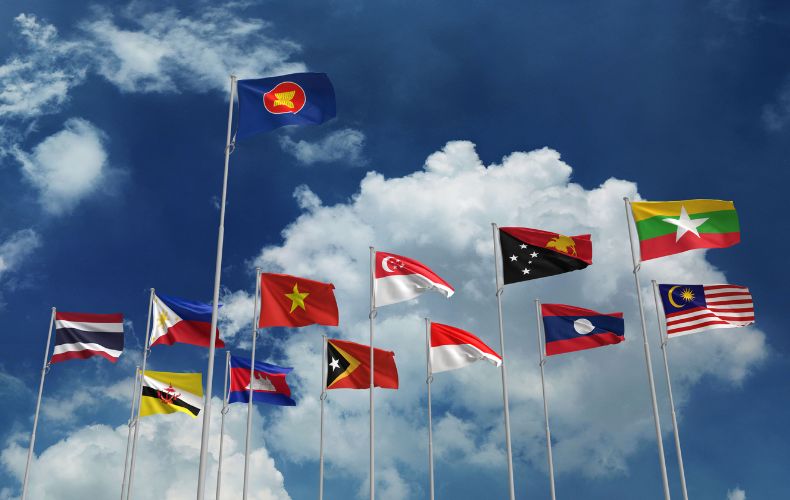
ASEAN’s tourism strategy is built on a powerful concept: positioning Southeast Asia as a single, diverse, and world-class destination. This vision goes beyond individual countries competing for visitors. Instead, ASEAN aims to create a cohesive regional experience that is:
- High-quality
- Sustainable
- Inclusive
- Globally competitive
Central to this vision is the development of human capital—ensuring that tourism professionals across ASEAN meet shared standards of excellence.
The ASEAN Tourism Strategic Plan emphasizes the need to “raise the capacity and capability of tourism human capital” through training, certification, and professional development. In other words, ASEAN recognizes that:
The quality of tourism is determined not just by destinations—but by the people who deliver the experience.This is where communication becomes critical.
The Philippine Context: Opportunity and Urgency
The Philippines stands at a pivotal moment.On one hand, it is recognized for its:
- Natural beauty
- Cultural richness
- Warm hospitality
On the other hand, it faces increasing competition within ASEAN, with regional data indicating that the country has been slower to recover in intra-ASEAN tourism compared to its neighbors. This creates both a challenge and an opportunity.The challenge is to raise standards.
The opportunity is to differentiate through experience.
Because while infrastructure can be replicated, and destinations can be matched, authentic human connection cannot be easily duplicated.
This is where the Philippines has a natural advantage.But advantage alone is not enough.It must be developed, refined, and strategically delivered.
Tourism as Experience: The Human Factor
Tourism is often understood in terms of places.But visitors remember experiences.
They remember:
- How they were welcomed
- How stories were told
- How interactions made them feel
A destination may be beautiful.But if communication is unclear, inconsistent, or unengaging, the experience diminishes.
Conversely, even simple destinations can become extraordinary when:
- Stories are compelling
- Delivery is confident
- Engagement is meaningful
This is why tourism is not only about geography.It is about narrative.And narrative is delivered through people.
From Tour Guide to Tourism Ambassador
This shift—from guide to ambassador—is fundamental.A tour guide explains.A tourism ambassador represents.
A guide provides information.An ambassador shapes perception.
In ASEAN-level engagements, every interaction is no longer personal—it is national.Every guide becomes:
- A storyteller
- A cultural bridge
- A representative of the Philippines
This transformation requires more than knowledge.It requires:
- Structure
- Presence
- Awareness
- Intent
And above all, it requires communication excellence.
Why Communication Is a Strategic Capability

Communication is often categorized as a soft skill.But in tourism, it is a core capability.It determines:
- How messages are understood
- How experiences are delivered
- How perceptions are formed
In the ASEAN setting, communication carries additional weight.It must be:
- Clear across language barriers
- Sensitive across cultures
- Professional across global standards
Because communication is not just about being understood.It is about being respected.
The Role of Spiel Development in Tourism Excellence
One of the most critical aspects of tour guiding is the spiel—the narrative that brings a destination to life.However, many spiels are:
- Informative, but unstructured
- Rich, but inconsistent
- Engaging, but not strategic
This creates variability in visitor experience.Spiel development transforms narration into intentional storytelling.It ensures that:
- Messages are clear and memorable
- Stories are engaging and relevant
- Delivery is consistent across guides
A well-developed spiel does more than inform.It creates experience.And in tourism, experience is the product.
Diplomatic Protocol: Communication Beyond Words

ASEAN is not only about tourism.It is about diplomacy.Visitors include:
- Delegates
- Investors
- International stakeholders
Interactions must therefore reflect:
- Professional etiquette
- Cultural awareness
- Diplomatic sensitivity
Diplomatic protocol is not about formality.It is about respect and awareness. This means, understanding:
- Cultural nuances
- Appropriate language
- Professional boundaries
Because in international settings, communication is a reflection of national identity.
Communication as Cultural Diplomacy
Beyond tourism, communication plays a deeper role in ASEAN: cultural diplomacy.
Regional cooperation is built not only on agreements, but on mutual understanding.Research on ASEAN integration highlights that cross-cultural communication is essential in shaping regional identity and cooperation .This means that every interaction—every tour, every conversation—contributes to:
- Building relationships
- Strengthening regional ties
- Enhancing mutual respect
Tourism ambassadors therefore becomenot just guides, but connectors between cultures.
Why the Department of Tourism Partnered Anew with TalkShop
In this context, the Department of Tourism’s decision to partner anew with TalkShop reflects a strategic priority.Not simply to conduct training.But to elevate standards.
Because preparing for ASEAN requires:
- More than knowledge
- More than hospitality
It requires professional communication aligned with global expectations.TalkShop’s approach is distinct.It does not treat communication as a standalone skill.
It integrates:
- Structure
- Psychology
- Real-world application
This ensures that training is not just informative—but transformational.
The TalkShop Approach: From Expression to Influence

At TalkShop, communication is reframed as influence.Participants are trained not just to speak—but to:
- Engage
- Adapt
- Persuade
- Represent
This includes:
- Structured frameworks (e.g., PPRAP, 5Cs)
- Personality-based communication strategies
- Experiential learning and application
Because effective communication is not about saying more.It is about achieving more.
Confidence, Clarity, and Credibility
Three principles underpin communication excellence:Confidence. Clarity. Credibility.
Confidence ensures presence.Clarity ensures understanding.Credibility ensures trust.
Without these, communication weakens.With these, communication becomes powerful.These are not innate traits.They are developed competencies.
Human Capital: The Competitive Advantage
Tourism competitiveness is not only about infrastructure.It is about human capital.Thus, the Tourism Strategic Plan emphasizes:
- Skills development
- Standardization
- Professionalization of tourism workers
This aligns with a broader reality:Destinations can be similar.Experiences can differ.And the difference lies in people.
Nation-Building Through Communication
Tourism is often viewed as an economic activity.But it is also a form of nation-building.
Every positive experience:
- Enhances national reputation
- Encourages return visits
- Attracts investment
Every interaction becomes part of the country’s story.In this sense, tourism ambassadors are not only service providers.They are nation-builders.
The ASEAN Opportunity: Positioning the Philippines
ASEAN presents a unique opportunity to position the Philippines as:
- A destination of natural beauty
- A center of cultural richness
- A standard of hospitality and professionalism
But this positioning must be supported by delivery.Because in a competitive regional landscape, perception is shaped by experience.
The Future of Tourism: Strategic, Human, Global
The future of tourism will not be defined solely by destinations.It will be defined by:
- Experience
- Connection
- Authenticity
And these are delivered through communication.As ASEAN 2026 moves toward greater integration, the demand for professionals who can communicate with clarity, confidence, and cultural intelligencewill continue to grow.
Conclusion: Communication as the Heart of Tourism Excellence
In preparing to host ASEAN 2026, the Philippines is not only preparing its destinations.It is preparing its people.Because tourism is not what visitors see.It is what they experience.nd experience is shaped by communication.
This is why the Department of Tourism partnered anew with TalkShop.
To move from:
- Information → Experience
- Guiding → Representing
- Hospitality → Professional Excellence
Afterall, tourism is not just about where we take people.It is about how we make them feel—and how well we represent who we are.


